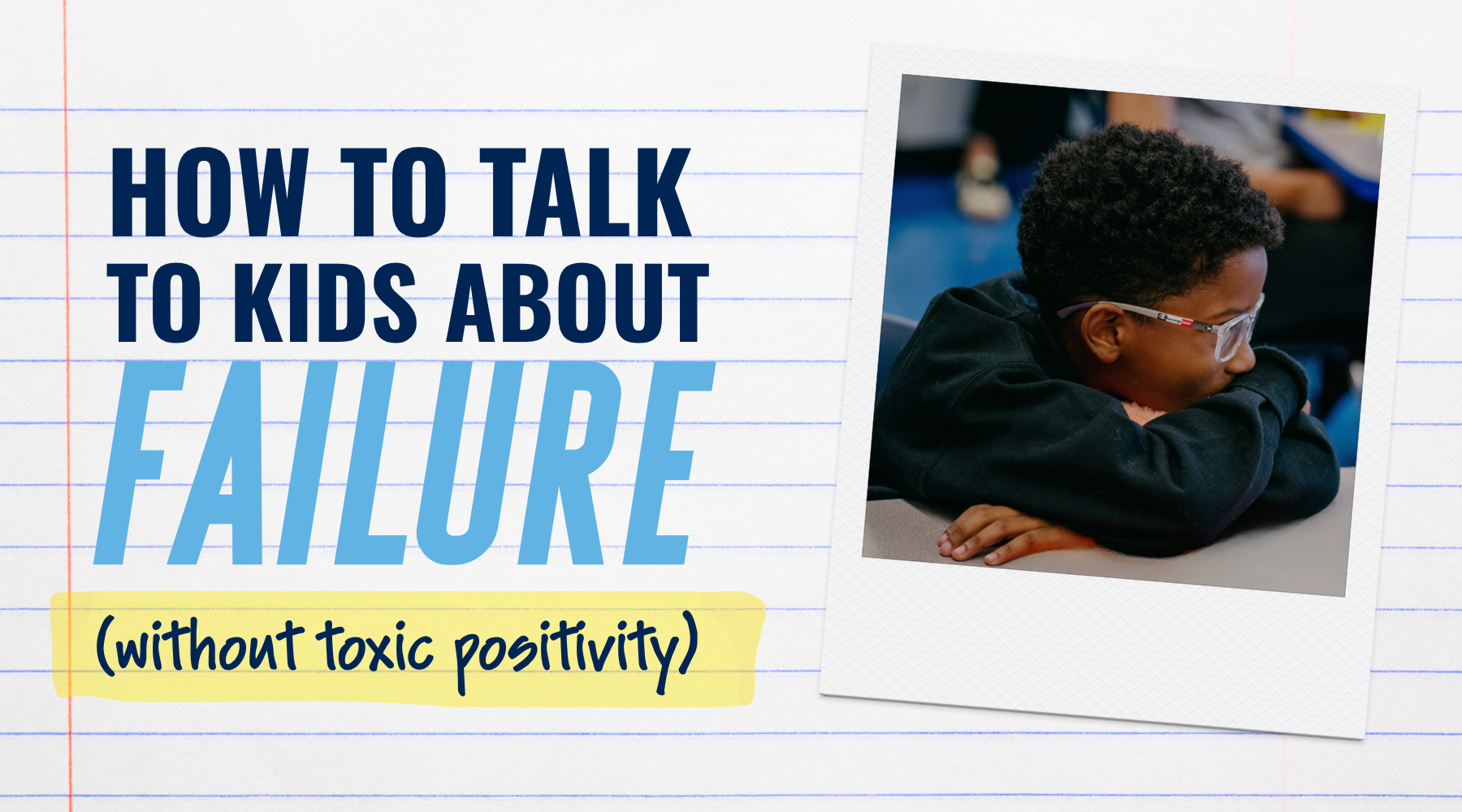
Failure is part of learning. Most teachers know this. Most teachers also know how hard it is to say the right thing when a student crumples up their test, shuts down after a tough tryout, or declares "I'm just bad at this" with total conviction.The instinct is to reassure. You'll do better next time. Everyone struggles sometimes. I believe in you. And while those words come from a good place, they often land hollow — or worse, they teach kids that the goal is to feel better fast, rather than to actually grow.That's toxic positivity: the habit of layering good vibes over real emotions until the emotions stop making sense. It's well-meaning, but it’s not helping.Here's how to do it differently.

Name the feeling before you reframe it
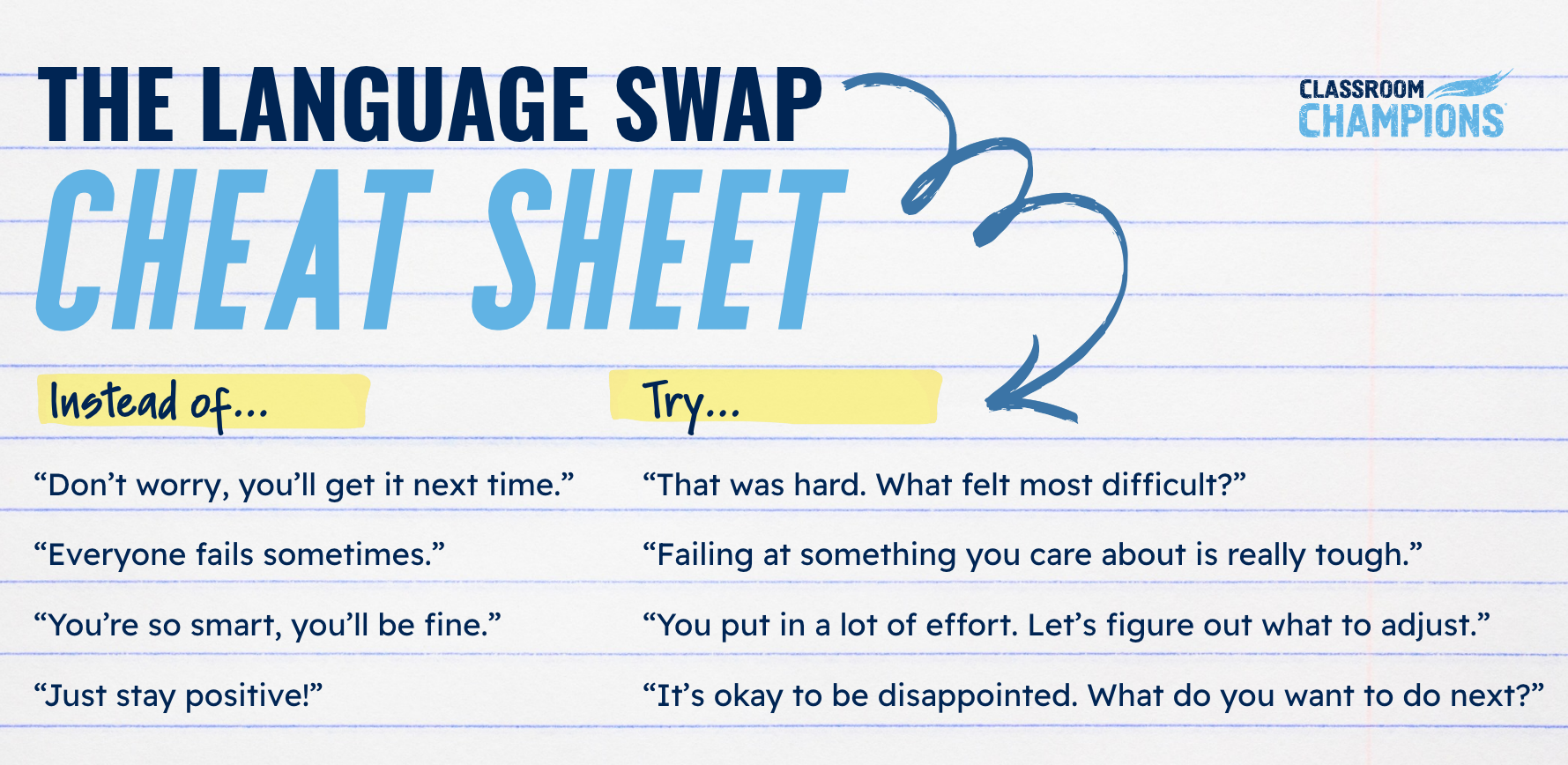
When a student is upset about failing, the last thing they need is an immediate pivot to silver linings. What they need is to feel heard.Try: "That's really frustrating. You worked hard on that."Simple acknowledgment doesn't require you to fix anything — it just signals that their reaction is valid. From there, the conversation has somewhere to go. Without it, any encouragement you offer will feel like you're changing the subject.Separate the performance from the person
One of the most damaging things a student can believe is that failure is identity. “I failed the test” becomes “I'm bad at math” becomes “I'm not a math person”… and suddenly a single moment becomes a story they carry for years.Language matters here. The difference between "you failed" and "this attempt didn't work" is small but significant. You're not sugarcoating, but you're being accurate. One attempt is data. It's not a verdict.Questions that help students separate performance from identity:- What did you try that didn't work?
- What would you do differently next time?
- What does this tell you about what to focus on?
Make failure a normal part of your classroom culture
If students only ever see polished success as correct answers, finished projects, and winning moments, then failure starts to feel like something to hide.One of the most powerful things you can do is model failure out loud. Make a mistake in front of your class and walk through your reaction in real time: "Okay, that didn't go the way I expected. Let me think about what happened." Show them that confusion and setback are part of the process, not evidence that something has gone wrong.This is exactly what Athlete Mentors do in the Classroom Champions model. When students hear a world-class competitor talk openly about missing the podium, getting cut, or rebuilding from injury and then watch them show up anyway — something shifts. Failure stops being shameful and starts being relatable. Even expected.You don't need an Olympic story to make this work in your classroom. You just need to normalize the conversation.